
Here is a little free music for everyone. Download my newest song for free from SoundCloud. Comments and feedback are always welcome.
Pearl Jam: Ten Overview
FOR EDUCATIONAL USE ONLY
Pink Floyd’s Dark Side or Maybe the Bright Side
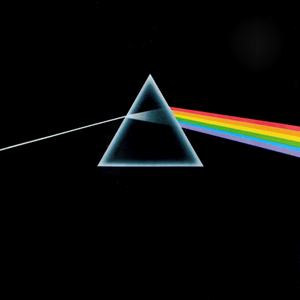
Only twenty two years into my life and I have yet to meet one person who has not at least heard about Pink Floyd’s album The Dark Side of the Moon. The album released in March of 1973, yet it still resonates with all the subsequent generations that have followed. As of today, there have been approximately 50 million copies sold since its release forty years ago.
Pink Floyd was already a somewhat popular group in the UK and Europe before the release of Dark Side but they had yet to gain popularity in the US. When they released Dark Side, it raced up the charts in the US and within a week, it was #1 on the Billboard top 200 albums chart. The album would stay on the charts worldwide for 741 weeks, which is about fourteen years. The album was an international success yet they did not rely on singles to get it there. The only single to come off the album was “Money” which jumped to #13 on the charts. Many people still list Dark Side as one of the best and most influential albums of all time to this day.
An album with a reach so far across so many different types of people is bound to have a very wide impact on other artists and popular music in general. There have been tribute bands created all over the world as well as many other artists who have performed entire covers of Dark Side live. Many artists have recorded complete cover versions as well while giving the albums funky names derived from the original.
The simple concepts of the album were extremely relatable to many people. Concepts such as war, money, madness, and time are things most everyone can apply to their own lives. The poetic delivery of the lyrics and the amazing soundscapes created by the band instantly captivated all who heard it. At least that was the experience that my friends and I had when we first heard it in our early high school years.
The album was not only a success because of the lyrical content and delivery but all the technical tricks and techniques that the group included as well. Although most of the ideas came from the band, the engineer Alan Parsons and the producer Chris Thomas had played a crucial part in the making of the album too. Together the group of musicians and studio employees created a masterpiece.
As a listener and an industry professional, the Dark Side of the Moon has had a profound affect on the way I think and the way I go about my work. Since I had first heard the album I was captivated, the lyrics allowed me to look deep inside myself while I drifted away on the flowing soundscapes cycling through my head. The whole album was just so mysterious and unique, yet it covered topics that were part of everyday life. While I wrote my own songs and lyrics, I melded that idea of writing about everyday topics in an artful way into my work. I especially took hold to the subject of madness because I felt like that was a very important subject in my early teens. I asked myself questions like “How do you know if your crazy?” or I would wonder if others felt just as crazy as I did at times. I suppose it really struck my interest in psychology and how the mind works in those early years of my life.
As I continue to further my career in the music industry, I will always take parts of what I have learned from this album with me. Although nothing I have directly learned from this album will set me apart from everyone else in the industry. The way that I project my perception of its messages in my own words and style will give me the edge. When I look towards the next five years of my career, my ultimate goal is to create music that touches people in such a way that Pink Floyd and other artists have over the years. I aspire to use simple topics in an artful way while surrounding them with interesting soundscapes that transport my listeners such as Dark Side has done for many others. Learning about a band like this really gives me hope about my future especially since they never expected the album to become such a success. Overall, it has taught me that I have to do something that I believe in and that I feel confident in and great things can happen.
ARP 2600 & Odyssey
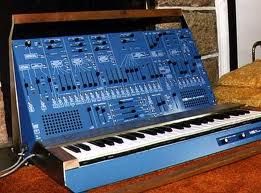 Alan R. Pearlman started ARP Instruments Inc. in Massachusetts during 1969. Over the next twelve years, ARP would rise to be a big competitor with Moog synths. Their first synth was the ARP 2500 model, which was a large modular synth similar to the large modular Moog 55. In the next few years ARP came out with the 2600 in 1971 and the Odyssey in 1972. These two synths would become some of the most popular around the world even to this day. In 1981, ARP shut down due to financial trouble and from then on, the ARP synths would become collector’s items.
The most popular or well-known ARP synth, the ARP 2600 was a semi-modular synth, which means that you could make sounds instantly. It did not require any extra wiring to make a sound but it also had the option to become modular with the use of patch cables on the front panel. This is partly why it became so popular besides its great sound. Another reason why it was popular was its size, it was small enough to carry to shows compared to the large 2500. Although the original intent that Alan Pearlman had was to distribute it to schools as a learning tool. This purpose never lived up to Alan’s expectations; instead, the world of music had absorbed the synth into its musical workflow.
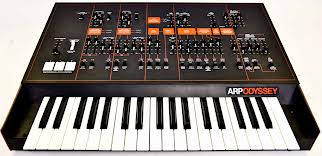 The ARP Odyssey released shortly after the 2600 in response to Moog’s new product, the Minimoog. The Odyssey would become one of the best selling synths that ARP would produce. This smaller synth was simple, self-contained so there was no need for modules, and it was easy to carry around. The Odyssey was actually just a slimmed down version of the ARP 2600 in an attempt to gain a wider range of customers. It ended up being a very worthy opponent to the Minimoog.
The impact that these two synths had on the musical world was tremendous. The number of groups that had used them was outstanding, not even counting all the other ARP models. Artists such as Jean Michel Jarre, Pete Townshend, Stevie Wonder, Genesis, Nine Inch Nails, Gary Numan, Kraftwerk, Devo, and Elton John have all used one of these synths at one time. People had even used them in movie scores and for sound effects such as R2D2 in the Star Wars trilogy. The importance of these synths was crucial to the development of the electronic music during the seventies and eighties and even now. Who knows how many classic songs would not have been made if it were not for the ARP synths. The synths were so popular that people have even sampled them and created virtual recreations in the form of plugins. Two examples are Arturia’s ARP 2600 V and Synth School’s Odyssey VSTi plugin.
Besides the Moog Synths, I have heard, and read about the ARP 2600 and the Odyssey more than any other classic synths. They have lived in many of the songs that I cherish and have been the source of many sounds that I have sought after. I could only wish that I would get the chance to experience these classics in real life. Luckily, with the plugins I can at least use the sounds that made them so legendary.
Kraftwerk: Man or Machine?
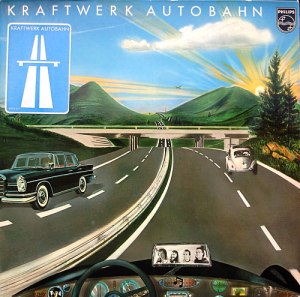
Kraftwerk’s two key members, Florian Schneider and Ralf Hutter founded the band in the early 70’s. They started out under the name Organisation and released one album called Tone Float during 1970. Their music at this time was very experimental and considered avant-garde. While they still used real instruments, they had a strong electric presence as well with effects and sounds. The music was very rhythm based and almost tribal in a sense. Due to poor sales, their record company dropped the group.
Florian and Ralf soon changed their name to Kraftwerk and started work on their next two self-titled albums as well as an album named Ralf and Florian. When they released Autobahn in 1974, it was their first release in the U.S. and it quickly became a hit worldwide. This album was their first real attempt at bringing pop music to their experiments. The group was still not using electronics exclusively yet though. The tracks on Autobahn still contained some flute, guitar, and violin although they were heavily processed most of the time. During these early years, Florian, Ralf, and any of the session musicians working with them attempted to portray themselves as scientists in photos and during their live shows. This perception was due to their short haircuts, their suit and tie wardrobes, and their technological themed music.
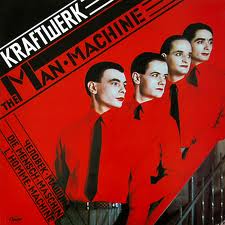
During the next few albums Kraftwerk’s image, music, and experimental approaches evolve. The group would continue to hold on to little pieces of their pop music style while expanding more on the experimental electronic side of Kraftwerk. Between the albums Radio-Activity in 1975, Trans-Europe Express in 1977, The Man-Machine in 1978, and Computer World in 1981, the group started to use electronics more exclusively than other instruments. They started incorporating more pop style dance rhythms as well as pop style melodies and lyrics. Kraftwerk started to change their appearance through these years as well. They started to portray themselves as robots rather than scientists or even humans. The increasingly electronic music reflected the robotic image very well.
What really makes Kraftwerk so iconic is the number of groups that drew influence from them. Artists such as David Bowie, Devo, Daft Punk, Gary Numan, U2, and many recent hip-hop and electronic acts owe thanks to Kraftwerk for the foundation of club music that they had innovated. Samples from Kraftwerk’s songs have been so frequently used almost everyone in the world has heard a beat or a melody that Kraftwerk had created. Their robotic self image and the futuristic concepts of their albums have been another one of the highly influential aspects of Kraftwerk. After the world caught up to their futuristic vision in the 1980’s, it spread like wild fire. Everyone seemed to dive right into the industrial, electronic computer world that Kraftwerk had innovated years earlier.
Although I had known about Kraftwerk for some time, I had no idea how much they really brought to the musical table. I had never really listened to any of their work until now. While writing this blog, I had listened to every album between Autobahn and Computer World, which some suggest to be the best of the Kraftwerk catalogue. It put a smile on my face to hear such familiar sounds in their original contexts. While I have grown up in the computer world with electronic music surrounding me I had no idea who to really thank until now. Once again, a force I had known nothing about had influenced me. Kraftwerk has risen to be one of my all time favorites and I have the utmost respect for them and their work.
Marvin Gaye: What’s Going On
Marvin Gaye started singing early in his life while attending church. He continued to seek musical outlets until Motown signed him early in the 1960’s for his singing and piano skills. He included many different genres in his work including Soul, Jazz, R&B, and funk. In most of his work, Marvin sang about love, romance, relationships, and heartbreak. He also covered many jazz tunes, mostly in the beginning of his career.

When Marvin finally released What’s Going On in 1971, it would end up being one of the most memorable albums of all time. Ronaldo “Obie” Benson from the Four Tops wrote the title song in San Francisco two years earlier with the help of Al Cleveland. While on tour Benson witnessed police officers beating protestors in a park. Since the protests were about the Vietnam War, that issue had passed through his mind as well. Benson offered it to his group but they saw it as a protest song. He tried to convince them that it was a love song but they did not see it the same way. Benson continued to search for someone that could sing the song until he found Marvin Gaye. Marvin sat in the studio and sang it with Benson when he offered the song, after a few changes he agreed to record it. While recording, Marvin devoted a lot of emotion to the album. He seemed to gather all his feelings about his brother’s stories from being in Vietnam, his singing partner Tammi Terrell’s death, the shooting of Martin Luther King and Bobby Kennedy, and all the violence that was happening in the streets and he put it all into this album.
After the recording, Marvin presented it to the record company. The owner Berry Gordy said it was horrible so they turned it down. Marvin decided that until Motown released the album, he would not write anything else for the company. The waiting game had finally paid off when the company got very desperate for another Marvin Gaye record. The executive vice-president Barney Ales decided to release the What’s Going On single without Berry’s knowledge. The company did not have a problem with the album after they realized how popular it was just after the first day. The recorded the rest of the album and it would shoot up the charts with three top ten singles.
This album was completely different from anything that Motown had released before. Motown produced mostly R&B, Soul, and pop albums that were just about all love themed songs. What’s Going On had very strong social and political themes though, which the Motown executives did not approve of. They disapproved of anything they saw as controversial but Marvin would not take no for an answer, he knew the world needed to hear this album. He was even prepared to end his career over it. Another reason this album stands out is that the session musicians were actually happy with what they were playing. Normally they would be playing the usual Motown material, which they did not like at all. They were mostly all jazz musicians and that was what they enjoyed playing. Once they recorded What’s Going On they felt good about what they were doing which naturally allowed them to sound their best.
I had not been too familiar with most of the tracks on this album until this research. A few covers had been quite influential in my life however. The two I can think of are A Perfect Circle’s version of What’s Going On and Sevendust’s version of Inner City Blues (Make Me Wanna Holler). This backwards procedure of learning about the original after the cover gives me a greater sense of how influential this album really was to so many artists across so many genres. I can actually trace many artists’ styles and influences back to this album now that I know more about it.
Multimedia Presentation: Brian Eno
Brian Eno: Electronic Wonder
T hroughout his career, Brian Eno has covered a lot of musical ground in his own work and his work with others as well. Earlier in his life, he had been interested in the popular American music he heard on the radio during the 1950’s and 60’s including Rock & Roll and doo-wop. It was not until art school where he started to play around with tape machines and actually became involved in some form of using sound as art. He had never learned an instrument or any music theory; his area of expertise fell into electronics. During his years in art school, he had become interested in the avant-garde styles of art music, particularly the minimalist style. One of his biggest influences was John Cage who wrote the book Silence that had influenced Brian greatly along with Cage’s experimentation with tape delay and loops. A few other minimalist composers who had an influence on Brian were Terry Riley, La Monte Young, and Steve Reich.
In order to compare and contrast Brian Eno’s work you really have to know what roll he played in the creation process. Once you understand his sound though, it is quite easy to pick out his influence in a song even if it is not his album. I started out listening to his third solo album Another Green World which had been completely written and produced by Brian. The album I decided to compare it to was The Joshua Tree by U2; Brian was only the producer on this project but his style and sound had quite a profound impact.
The music on Another Green World is brilliantly complex when it comes to texture and timbre. When you really get into the notes and rhythms played however, as a professional with music theory experience I can tell the amateurish nature of the music. I could tell that Brian had no formal music training but this just makes his work beautifully imperfect. It is almost a reflection of humanity. The synth like processed guitars, the bouncy rhythms on the bass, the unreal synth sounds, and all the tracks soaked in effects to pull it together. The album is a true form of audible art.
Listening to The Joshua Tree by U2, I could instantly tell that Brian Eno’s influence was dripping throughout this album. The pop rock influence is definitely more prevalent on this album, especially in the drum rhythms. The harmonic content of the album is much more mainstream and realized than Eno’s own work too. U2 did a great job at keeping a core sound of their own while completely embracing Eno’s sound and influence. The only other major difference between the two is the amount of vocals on this album compared to Brian’s work. U2’s album has vocals on every track in some sense but there are only a few tracks with vocals on Another Green World.
If I had not known anything about the albums or artists but I listened to them back to back I might think that they were both the same artist but from different eras. The swelling synths, the use of delays and reverbs, and this unique spacey wilderness feeling is constant through both albums. It is amazing how consistent one person can be throughout so much work without really trying to be.

Brian Eno had come up with quite a mixture of art music fused with popular music. His early years of fusing rock & roll with experimental processes such as delays, electronic sounds and minimalist visions weren’t exactly new but he learned to harness them like very few had at the time. He thought about sound as if he was painting a picture. He used timbre and texture more than the standard importance of notes and harmony. He wanted to create unique landscapes that you could listen to; this is probably the thinking behind his visual/audio art displays throughout the world. Brian’s innovations using the studio as an instrument had really furthered what Brian Wilson and The Beatles had previously started. He seemed to take his concepts to space and then bring them back for the earth to hear. His techniques for processing instruments and vocals were technical even in his early years with Roxy Music. A few of these techniques were pioneered by the Beatles during the 60’s like reversed sounds and tape loops but instead of trying to keep the sounds familiar, Brian would manipulate them into sounds not from this world. The biggest surprise about all of this innovation is that it was all by chance, Brian was not afraid to experiment and he generally received great results.
Brian Eno’s work has had probably the greatest impact on my life before I had even know his name. The artists that he had worked with such as U2, Coldplay, David Bowie, and the Talking Heads have all been a part of my musical influence over the years. Who knows where electronic music would be at this point without Brian Eno or even ambient music for that matter. The man even created the wonderful start-up sound for Windows 95 operating system that I was accustomed to as a kid. His outlook on music and his lack of musical training brings a great sense of hope to me. I feel that as long as I work my hardest to innovate instead of replicate what is popular, I could have a chance in this music industry.
Revolver: Innovation and Evolution
The Beatles had started out as a cover band around the Liverpool area in England while they were just teens. They wore the standard rock & roll attire of leather jackets and tight pants. They viewed themselves more as a group of rebellious teens playing music than a pop group at this time. As they started to make a splash in the local scene the group hired Brian Epstein as their manager, Brian started to clean up their act. He dressed them in matching suits and required them to maintain proper manners in public. The new manager Brian Epstein wanted to convey a certain image of innocence for the Beatles that would be acceptable to many different social groups. The music that the group recorded spanned many different topics but many of them alluded to themes such as love and loneliness in the early years at least. The sonic characteristics of their early work was more like folk rock or pop rock compared to the more experimental approaches the Beatles were known for with the albums after Rubber Soul.

During the recording of the Revolver sessions, the Beatles started to find their own interests outside the studio. Paul McCartney started to become a fan of eccentric art and the carefree lifestyle. This caused Paul to look at his music as a form of art rather than a craft or just music. It also inspired some of the classically arranged songs and the use of orchestral instruments. George Harrison started to further his interest of the Indian culture. After a few encounters with the culture, George started to find a passion for the Indian way of life, religions, and the music of the area. He would eventually become vary passionate about meditation and self-awareness as well. This initial interest was prevalent on the Revolver album but reached further heights on later albums. John Lennon started to experiment more frequently with the hallucinogenic properties of LSD. John had written a couple songs for the album while using the drug, which affected his lyrics only slightly at first. Then he wrote “ Tomorrow Never Knows” which basically, had been made into an audible acid trip.
The recording studio is where all the real magic happened. During the recording of Revolver, the Beatles had turned the studio into an instrument. They used anything that they felt would sound good. The band included conversation before a few takes and a count in at the beginning of the opening track “Taxman.” They used a Leslie speaker on John Lennon’s voice for “Tomorrow Never Knows.” They recorded Paul’s bass cabinet with another bass cabinet acting as a microphone. The band found new ways to process the drums, they played with reversed recordings, artificially doubled tracks, tape loops, and sound effects like on “Yellow Submarine.”
They brought so many studio innovations into this album. The drums alone had several innovations that had not been in the mainstream before. Revolver was the first time a drum kit was run through compression, the microphones were moved much closer than previously practiced, and the kick drum was stuffed with cloth. This had been the beginning of the huge drum sounds on later rock records throughout time. Paul McCartney had been the initial member to bring the first tape loops into the studio. He had been playing with a home tape recorder and had brought a bunch of loops the next day that they used mainly on “Tomorrow Never Knows.”
This album has been a profound influence on me throughout my life. I remember hearing “Yellow submarine” as a child and could not get it out of my head. As I grew older, I started to have a much better appreciation for the songs such as “Eleanor Rigby” or “Got To Get You Into My Life.” This has been an inspiring album for me as a listener for a long time. Now that I have a better understanding of the studio innovations that went into the album, I understand why it is one of the best ever made. As an industry professional, I have used processes such as reversed sounds and drum compression but I never realized I had the Beatles and their studio team to thank for it.
Pet Sounds: Brian Wilson’s Masterwork
The Beach Boys have been an iconic American pop rock band for over fifty years. During their early years, The Beach Boys mostly covered topics such as surfing, fun in the sun, young love, and hot rods. The band was at the forefront of the California sunshine and surf image that swept the nation. The music was happy, fun, and playful while still wielding complex harmonic content. The combination of all these concepts gave the music a huge commercial appeal for teens throughout America. As the band members matured, so did their music. If you listen to their albums chronologically from Surfin’ Safari to Pet Sounds, you can sense an evolution in the instrumentation as well as the lyrical content.
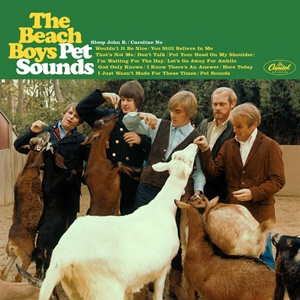
Brian Wilson was the mastermind behind The Beach Boys. He was the founding member and the leader. Brian also wrote, arranged, and produced the majority of the music for the group. Throughout most of his career, he had utilized collaborators such as Mike Love, Gary Usher, and Tony Asher mostly for lyrical content as well. In 1965, Brian decided that he would not tour with the band any longer. He dedicated his time to writing and producing songs for the group at home. This is when Brian and the music started to really evolve. Over the years, Brian had been studying the techniques of Phil Spector and his wall of sound and it really started to show. The complexity started to reveal itself as Brian had more and more time to mill out his fine musical products.
In late 1965 when the Beatles had released Rubber Soul, Brian heard the album and immediately went to work on Pet Sounds. He wanted to create something better not only compared to the Beatles but compared to his own work as well. The whole idea behind Pet Sounds was to write songs based on how Brian felt; He wanted to show his soul to the world. Brian once again called on the talent of a group of session musicians called the Wrecking Crew who had worked with him previously. Brian had also called upon Tony Asher who worked at an ad agency to help write the lyrics for the Pet Sounds Album. One of the unique characteristics about this album was the way that Brian layered instruments together to create these complex forged sounds. He would layer several basses together or several guitars or even flutes and a glockenspiel like in the beginning of Sloop John B. This is essentially Phil Spector’s Wall of Sound technique but Brian had kept morphing it into different applications that Spector never explored. Brian used many different instruments for this album including the bass harmonica, accordions, orchestral instruments, and all types of percussion alongside the typical rock instruments. This album was also unique because it was a successful attempt to get away from the novelty songs that the Beach Boys had previously written about with the surf and sun scene.
This album has had a substantial impact on me as a listener and as a music industry professional. Just as Brian Wilson had pushed the limits of his time and technology, I crave to do the same thing. Learning about the ways that Brian had created these extraordinary sounds has given me the feeling that he had when he was competing with the Beatles. I want to create something that can match a masterpiece album such as this. The matured emotions of this album really resonate with me. I am grateful that Brian Wilson and his team had brought all of this work together for the world.
 Trebled Productions LLC.